My 12-volt negative ground Ignitor won’t start/runs poorly. What should I check?
If your Ignitor-equipped engine is not starting or is running poorly, follow these troubleshooting steps:
Check Grounds
Measure resistance from the aluminum Ignitor plate to the battery’s negative terminal using a digital multimeter.
Net resistance should be less than 0.2 ohms.
If resistance is higher, trace the ground path (Ignitor plate → distributor housing → engine block → battery negative) and correct any poor connections.
Verify Coil Resistance
Ensure your coil’s primary resistance matches the requirements for your cylinder count:
1 - 6 cylinders: 3.0–4.5 ohms
8 & 12 cylinders: 1.5–3.5 ohms
Include ballast resistor resistance if used.
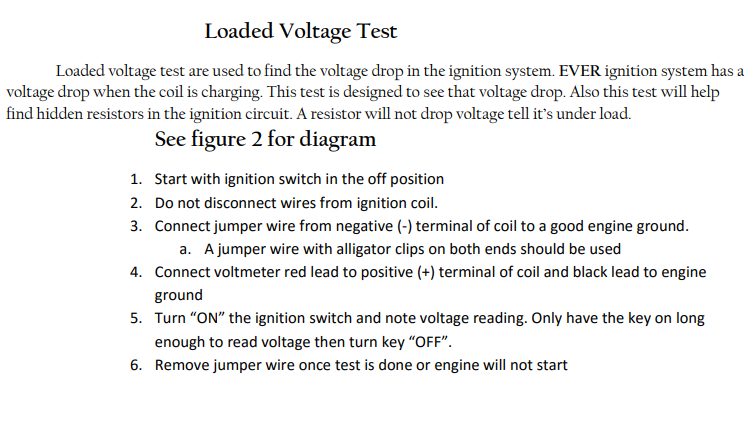
Perform a Loaded Voltage Test
With ignition “ON,” you should see at least 8.0V at the coil positive terminal (11.5V is typical).
During cranking, voltage should be 8.0V or higher (9.5V is typical). Low voltage may indicate poor wiring, bad connections, or a weak battery/starter.
Other Common Issues
Use suppression-type spark plug wires (including coil wire).
Never leave the ignition on without the engine running - this can damage the Ignitor and coil.
Ensure the tachometer isn’t grounding the coil’s negative terminal during testing.
Try a known-good coil to rule out coil failure.
Inspect the Ignitor for overheating signs (wrinkled or burnt label).
Bench Testing the Ignitor
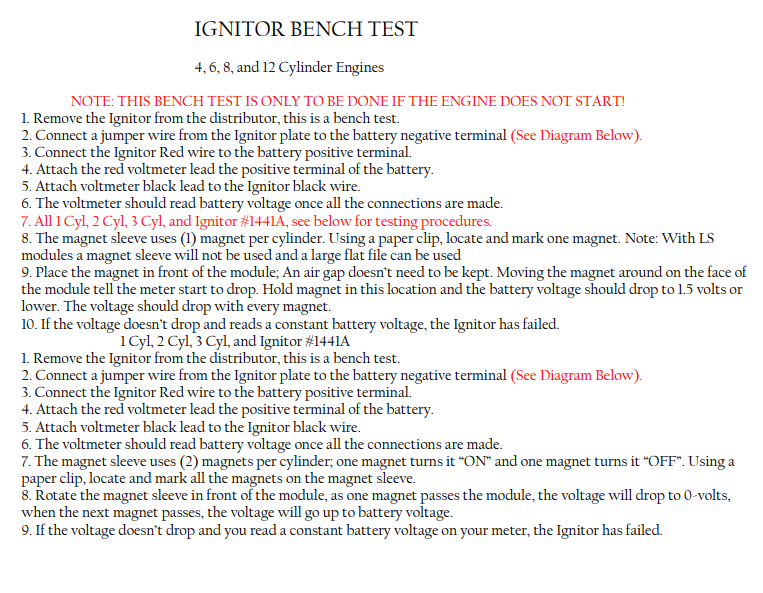
If the above checks don’t resolve the issue, you can remove the Ignitor and perform a bench test per the instructions. A failed Ignitor will show constant battery voltage on the meter without dropping when a magnet passes the module.
By following these steps, you can identify whether the issue lies in the Ignitor, the coil, wiring, or another part of the ignition system.